
What I Was Dealing With
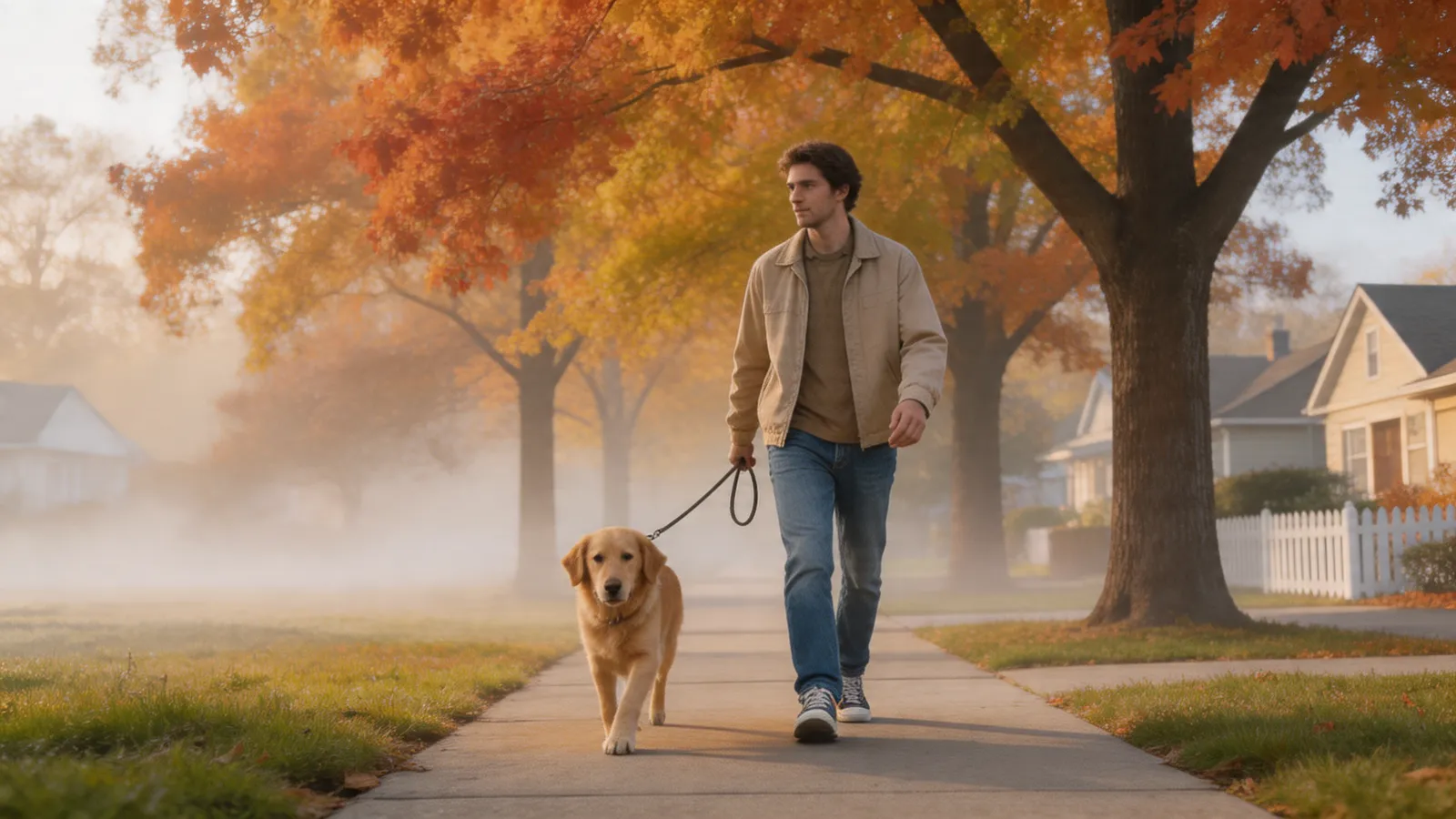
Rusty is a four-year-old rescue I adopted two winters ago. Shepherd mix, 48 pounds, calm at home, absolutely lost his mind on a leash when another dog walked by. Lunging, barking, the full embarrassing scene in front of the neighbors. I'd tried the usual things, "no" commands, treats as distraction, switching walk times, even a head halter. Nothing stuck.
What finally worked wasn't a tool or a command. It was a 20-minute daily routine that rebuilt his baseline arousal level over about six weeks.
Why the "Correct the Barking" Approach Fails
For the first six months I was trying to correct Rusty after the fact. Stop the bark, get him to sit, give a treat. The problem with that approach is that by the time he's barking, his nervous system is already pegged. Correcting behavior on a maxed-out nervous system doesn't change anything long term. It's damage control.
The shift that finally worked was: instead of correcting the reaction, lower the baseline. A dog with a calmer baseline has more room before his nervous system spikes. More room means more chances to catch him before the bark.
The goal stopped being "stop the barking" and became "never let his arousal climb high enough to bark in the first place."
The 20-Minute Routine
Every morning, before his walk, Rusty got 20 minutes of structured work in the backyard. Three parts:
- 7 minutes of impulse control games. Wait for food, look at me, find it (scent games). These built his ability to regulate his own attention.
- 7 minutes of sniffing work. I'd hide 15 pieces of kibble in the grass and let him find them. Sniffing drops arousal faster than almost anything else.
- 6 minutes of calm settle. He'd lie on a mat while I stood quietly nearby with my phone. No treats for movement. Treats every 30 seconds for lying still. This taught him that "nothing is happening" was a rewardable state.
Weeks 1 to 2: Nothing Obvious Changed
The first two weeks felt pointless. Walks were still chaos. The morning routine was going fine in the backyard, but it didn't transfer. I almost quit around week 10. I'm glad I didn't.
Week 3: The First Real Moment
Week 3, Wednesday morning, we passed a golden retriever on the opposite side of the street and Rusty noticed, looked at me, and kept walking. He didn't bark. I gave him a treat the size of my thumb and said "yes" in a tone I'd been practicing. That was the first time in six months he'd made that choice unprompted.
Want the structured framework I used?
The impulse control games came from Brain Training for Dogs. It's not magic, but it gave me a daily structure that was easier to stick with than piecing it together from YouTube.
Check Brain Training for DogsWeeks 4 to 6: The Shift
From week 3 onward, the walks got steadily easier. Not linearly, there were bad days. But the trend line was real. By week 6 I could walk him past most dogs at 15 feet with him watching them calmly and choosing to keep moving. He still reacts to specific triggers (a dog running directly at us on a narrow sidewalk, for example), but the baseline is fundamentally different.
What Didn't Work
- Stuffing him with treats during a bark (just trained him that barking produced treats, counterproductive)
- Switching walk routes to avoid dogs (avoided the problem, didn't solve it)
- Correcting with a sharp "no" or a leash pop (spiked his arousal even higher)
- A head halter (reduced the mechanical lunging but didn't change the underlying state)
What Did Work
- The 20-minute morning routine, done every day without exception
- Sniffing time on walks instead of brisk pace
- Longer line (10 foot leash) in calm environments, gave him more autonomy
- "Look at that" game: reward the moment he notices the trigger, not after the bark
- Accepting that some days would be bad and not letting that break the streak
If you want the full training framework
Brain Training for Dogs was the structured base I used. See our full review for who it's right for and who should look elsewhere.
See the CourseWhat I Wish I'd Known Sooner
Reactive dogs aren't being bad. They're nervous systems in overdrive. The framing shift from "fix the behavior" to "lower the baseline" was the single most important thing I got right. Everything else was execution.
If you're in the thick of it with a reactive dog, be patient. The change isn't visible in the first two weeks. It shows up around week three, and then it compounds.